
Verified-angle construction map
Approved-view rounded curly bob construction map
The approved front, side, and rear registry views are annotated only where the center part, balanced width, rounded crown-to-rear curve, upper-neck dry perimeter, continued rear part, and balanced rounded edge are visible. The diagram does not prescribe curl type, exact length, hidden layering, sectioning, elevation, overdirection, cutting angle, tension, product formula, or timing.
3 publication views · 6 callouts

Center part and balanced side width
The front establishes a visible center part and a rounded, broadly balanced side-to-side silhouette.
- 01
Center part
A visible central part divides the front curl fall; depth, section width, and natural persistence are not recorded
- 02
Balanced side width
Defined curl groups create broadly balanced width around the cheeks and jaw without proving identical density or hidden internal layers

Rounded crown-to-rear curve and upper-neck perimeter
The profile shows a continuous rounded outer curve and a dry curl edge finishing above the shoulder.
- 01
Rounded crown-to-rear curve
The visible outer silhouette flows from crown into rear projection; elevation, layering, and weight placement remain unknown
- 02
Upper-neck dry perimeter
The lowest visible curl ends sit around the upper neck and remain clear of the shoulder; exact stretched or wet length is not stored
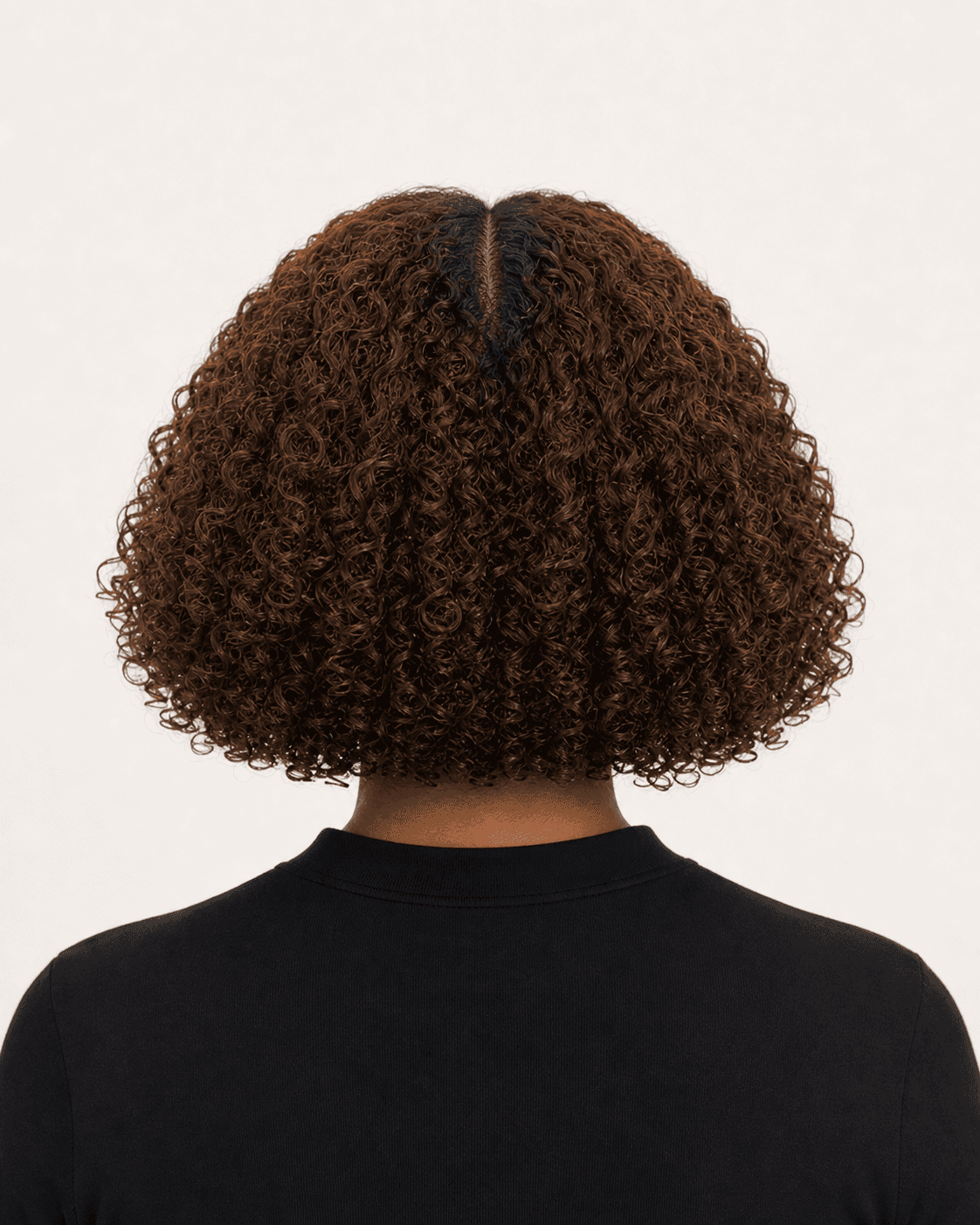
Continued center part and balanced rounded edge
The rear records a centered crown part, dense visible curl distribution, and a softly balanced lower silhouette.
- 01
Continued center part
The central part remains visible through the upper rear crown; hidden sectioning and natural reset behavior are not established
- 02
Balanced rounded edge
The lower rear curl edge reads softly rounded and broadly balanced rather than blunt, pointed, or shoulder-length
Pins locate the reference evidence; the numbered notes make the request legible in the chair. This is an original Hairqut communication diagram, not a universal service prescription.
Provenance: The diagram uses locked approved publication views that mirror the reconciled formal package byte-for-byte. Semantic HTML and SVG overlays preserve those pixels. A newer generated raster passed the six exact labels but remains internal because it re-renders the subject and rasterizes critical meaning.