
Verified-angle cut map
Approved-view coil field, temple, and low-nape map
The approved front, side, and rear views are annotated only where the rounded short coil field, defined front edge, localized temple gradient, retained upper-side weight, full rear coily field, and localized low-nape gradient are visible. The diagram does not prescribe curl code, exact length, density, guards, measured fade or taper height, skin exposure, blend sequence, neckline method, enhancement, product, timing, or price.
3 publication views · 6 callouts

Rounded short coil field and defined front edge
The front documents visible silhouette and edge definition while preserving uncertainty about natural pattern, length, symmetry, and enhancement.
- 01
Rounded short coil field
A compact coily-looking field forms a rounded-to-softly squared top; natural curl code, dry and stretched length, density, and shaping method are unknown
- 02
Defined front edge
The front edge appears sharper in the front view than in rotated views; natural line, edge method, enhancement, fibres, and symmetry are unverified

Localized temple gradient and retained upper-side weight
The profile distinguishes a small visible temple transition from the darker weight retained above and behind the ear.
- 01
Localized temple gradient
A short transition is visible around the temple and sideburn; taper or fade class, measured height, guards, lever positions, blend sequence, and skin exposure are unknown
- 02
Retained upper-side weight
Dark coily-looking weight remains above and behind the ear rather than opening into a continuous high side gradient; exact density and length are unrecorded
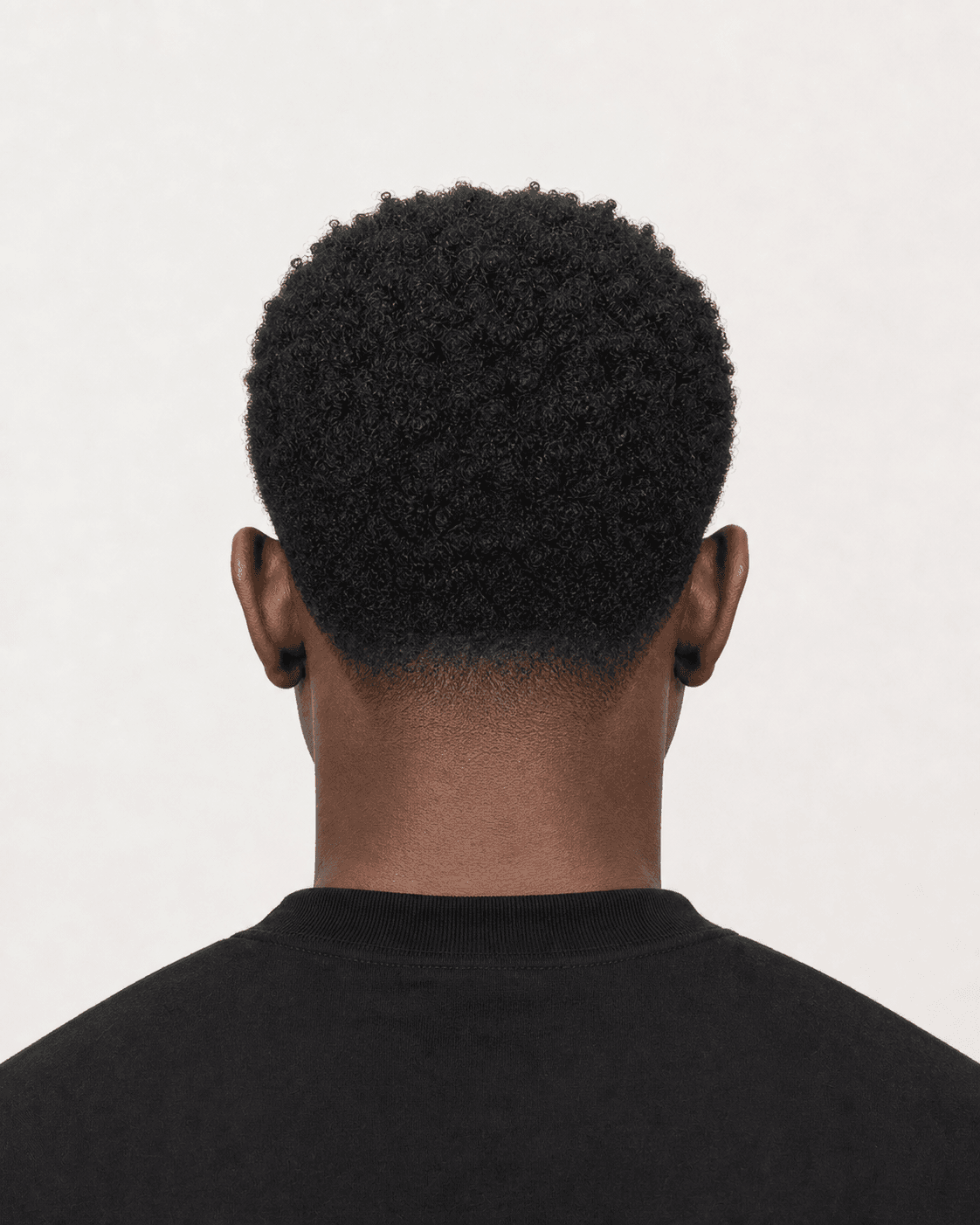
Full rear coily field and localized low-nape gradient
The rear records retained occipital weight above a separate low central transition without inventing exact taper height or neckline technique.
- 01
Full rear coily field
A dark coily-looking field retains volume through crown and occipital zones; exact curl code, density, length, elevation, and shaping sequence are unknown
- 02
Localized low-nape gradient
A separate close-looking transition is visible at the low central nape; measured height, guards, skin exposure, blend sequence, and neckline method are not documented
Pins locate the reference evidence; the numbered notes make the request legible in the chair. This is an original Hairqut communication diagram, not a universal service prescription.
Provenance: The diagram uses locked canonical low-taper-short-coily-top publication views that mirror the formal package byte-for-byte. Semantic HTML and SVG overlays preserve approved pixels, responsive meaning, and accessibility.