
Verified-angle cut map
Approved-view fringe, crown, ear, and nape map
The approved front, side, and rear views are annotated only where the diagonal side-swept fringe, textured crown sweep, soft exposed-ear contour, retained upper-side length, full rear crown, and narrowing central nape point are visible. The diagram does not prescribe exact lengths, hidden layers, graduation, sectioning, elevation, guards, taper class, cutting tools, finish method, timing, or price.
3 publication views · 6 callouts

Diagonal side-swept fringe and textured crown sweep
The front documents visible surface direction and separation without assigning exact fringe length, section, symmetry, or cutting method.
- 01
Diagonal side-swept fringe
Separated fringe pieces move diagonally across the forehead; exact dry length, width, source section, cutting line, product, and hold are unknown
- 02
Textured crown sweep
Visible crown and top strands travel diagonally with irregular separation; natural movement, layer map, elevation, overdirection, and styling method are unrecorded

Soft exposed-ear contour and retained upper-side length
The profile distinguishes the visible ear outline from the longer textured field above without inventing a close-clipper or taper recipe.
- 01
Soft exposed-ear contour
A soft irregular perimeter follows the exposed ear; tool choice, guard, skin exposure, exact clearance, and edge method are not documented
- 02
Retained upper-side length
Separated textured length remains above and behind the ear rather than reading as a uniform close crop; exact centimetres and connection are unknown
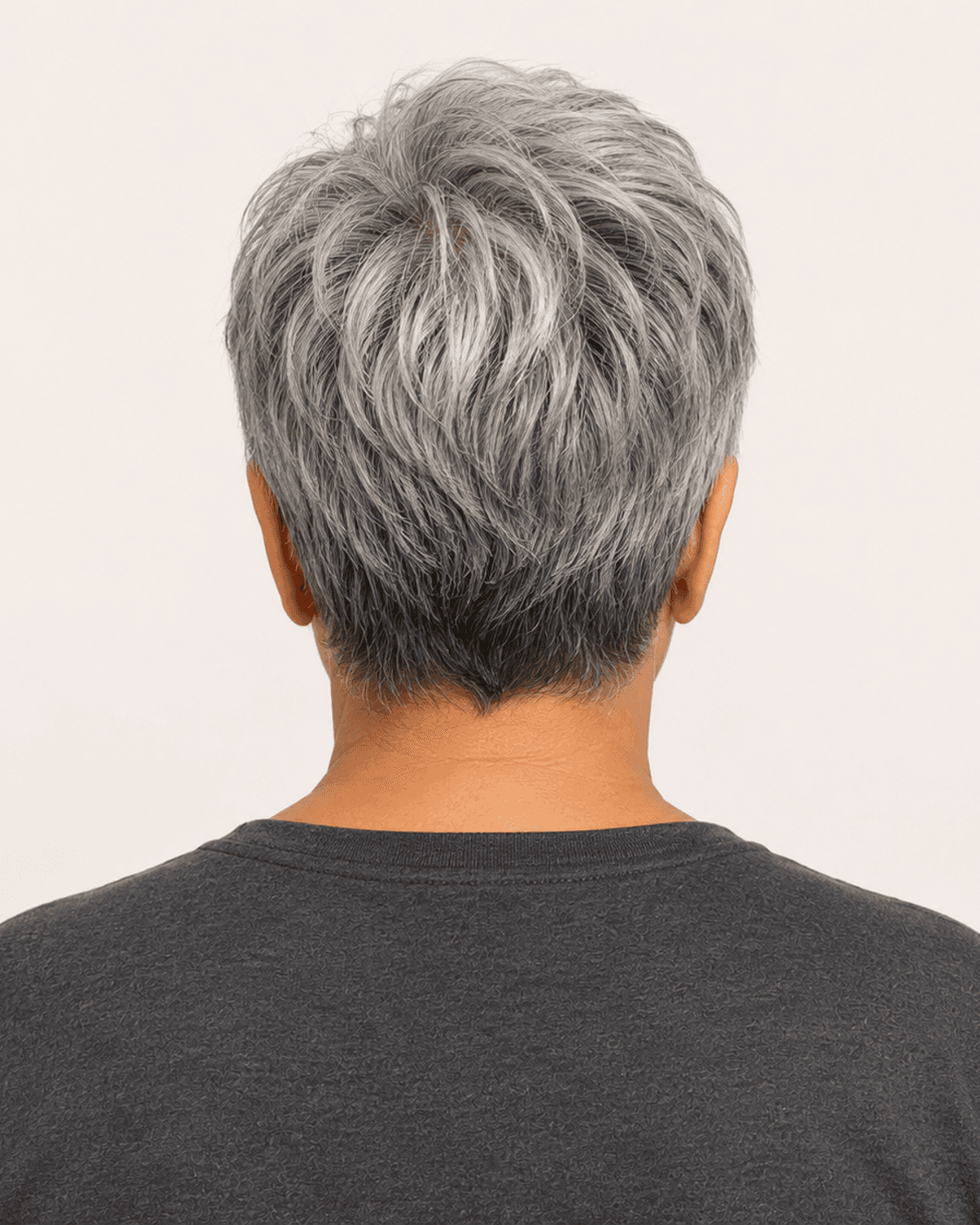
Full rear crown and narrowing central nape point
The rear records retained textured mass narrowing toward a soft central point without inventing graduation, taper class, or neckline technique.
- 01
Full textured rear crown
Separated strands retain visible fullness through crown and upper rear; exact density, length, layers, graduation, and weight removal are unknown
- 02
Narrowing central nape point
The lower rear narrows into a soft central point with irregular fine ends; guard, clipper, shear, razor, outline, and taper sequence are unrecorded
Pins locate the reference evidence; the numbered notes make the request legible in the chair. This is an original Hairqut communication diagram, not a universal service prescription.
Provenance: The diagram uses locked canonical cropped-pixie-soft-fringe publication views that mirror the formal package byte-for-byte. Semantic HTML and SVG overlays preserve approved pixels, responsive meaning, and accessibility.