Hairqut.
HQ-STYLE-000045QA passed with warnings

Style · Bantu knots

Bantu Knots with Clean Parting

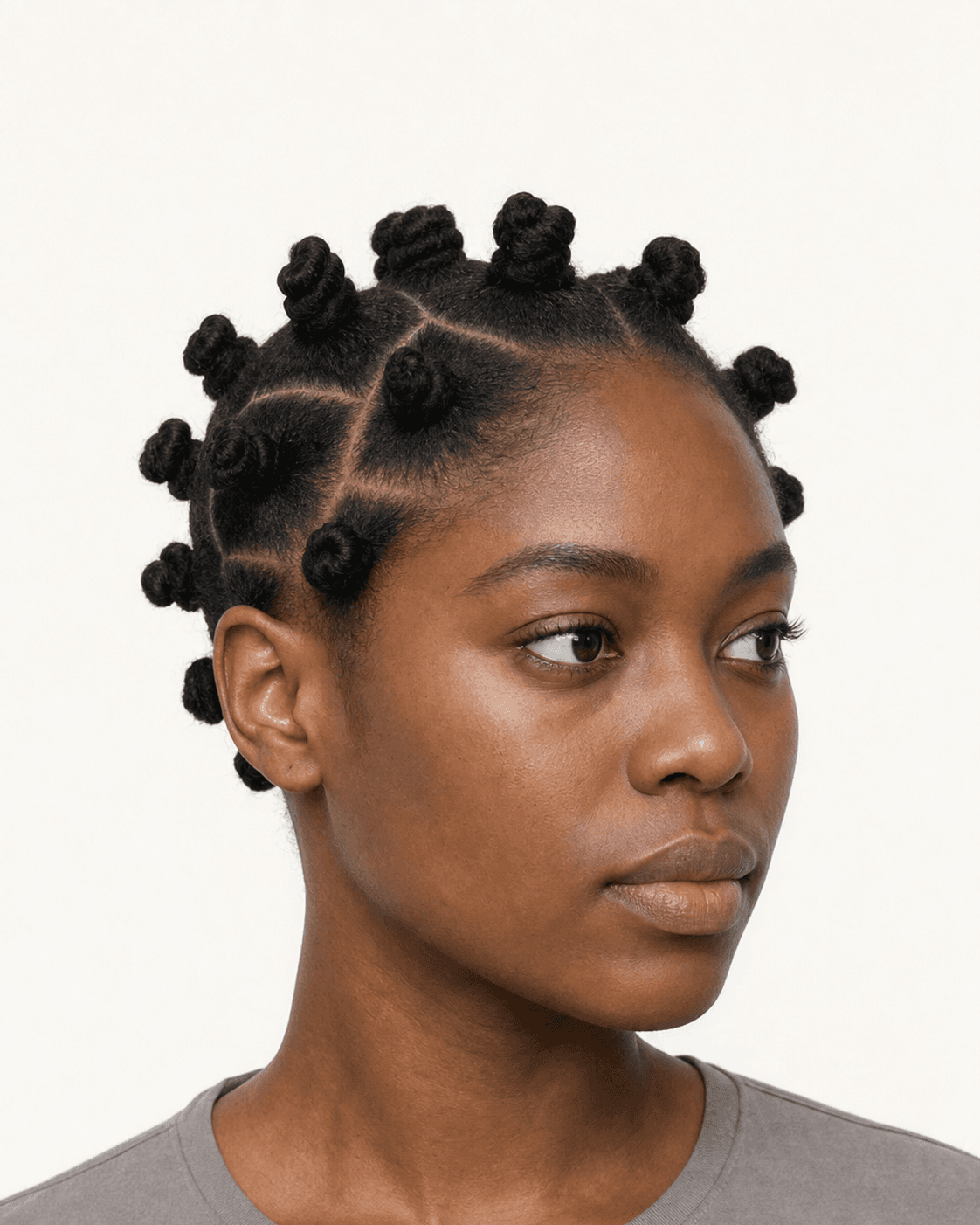
Medium compact Bantu knots distributed across a clean geometric section map, with realistic scalp texture, natural edges, and a balanced crown-to-nape finish.

Available as a mobile service at homes, offices, and hotels across Greater Montréal.

Three-quarter view of Bantu knots with clean parting
Interactive view4 verified angles

Three-quarter

20°

Drag to inspect the registered construction

Reference angle explorer

Drag or swipe · horizontal scroll or Shift + wheel · arrow keys

2 / 4

Fashion white · target #F2F0EA

Current documented coverage: four verified angles from 0° to 180°. A continuous 360° turntable publishes only after 24–36 consistent frames pass registry QA.

Showing three-quarter view at 20°.

Required registry views

One style. Four viewpoints.

A single portrait can hide the taper, fade height, crown, weight line, or neckline. Every published Hairqut record must show the construction from the front, three-quarter, side, and rear. The recorded fashion white backdrop keeps the silhouette readable while preserving fine strand detail.

Front view of medium Bantu knots with clean geometric parting
Front
Three-quarter view of Bantu knots with clean parting
Three-quarter20°
Side profile of Bantu knots showing the section map from hairline to nape
Side90°
Rear view of Bantu knots showing balanced geometric sections
Rear180°

Hairqut Style Blueprint · Style construction

A visual brief your professional can use.

The registered views establish the reference. This blueprint pins the most important construction decisions directly to those source views, then makes adaptation, maintenance, and the chair-side conversation clear.

Verified-angle construction map

Approved-view Bantu knot construction map

The approved front, side, and rear registry views are annotated only where the natural front hairline, balanced front knot scale, visible geometric section map, compact coiled knots, crown-to-nape distribution, and natural low nape edge are visible. The diagram does not fix knot count, hidden section geometry, twist direction, root method, tension, added-hair use, product formula, or wear duration.

3 publication views · 6 callouts
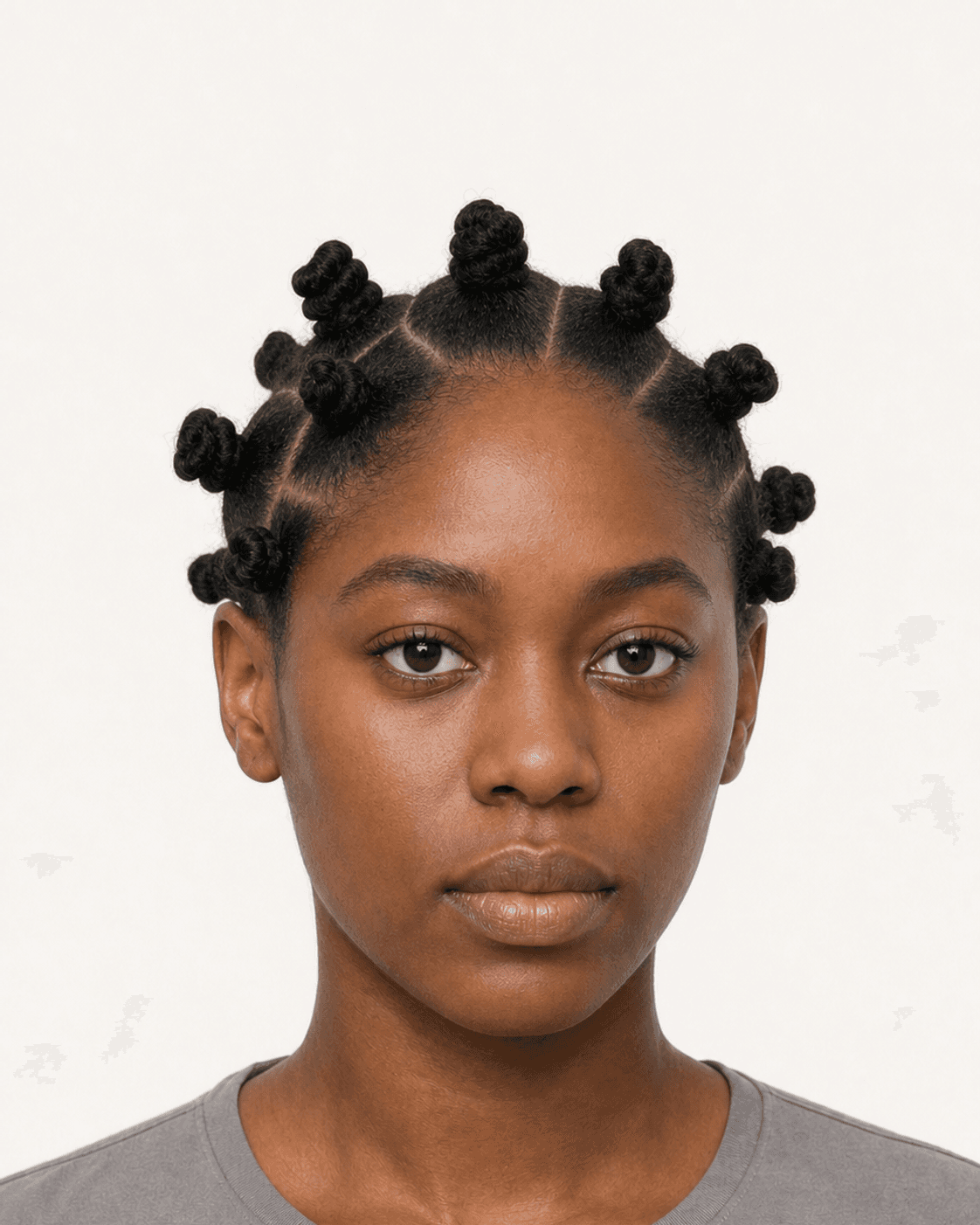
Annotated front construction map for Bantu Knots. Front view of medium Bantu knots with clean geometric parting
Front
Approved publication view

Natural front edge and balanced knot scale

The front view establishes a natural hairline, clean front sections, medium compact knots, and broadly balanced left-to-right placement.

01

Natural front hairline

The front edge remains visible and softly natural without an added accessory, carved design, or elaborate laid-edge pattern

02

Balanced front knot scale

The visible front and top knots remain medium and compact with normal positional variation rather than one guaranteed fixed count
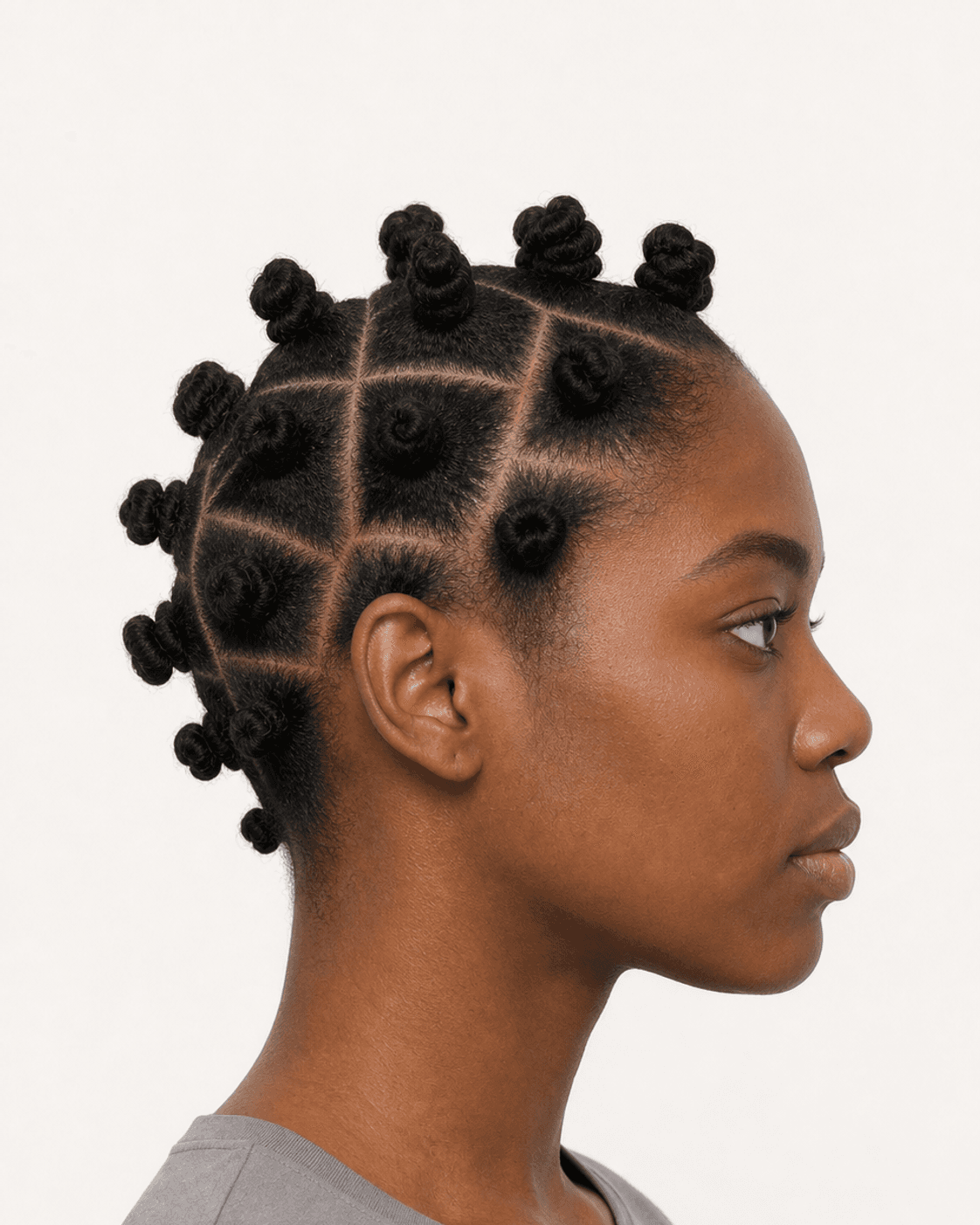
Annotated side construction map for Bantu Knots. Side profile of Bantu knots showing the section map from hairline to nape
Side90°
Approved publication view

Visible section map and compact coils

The profile exposes skull-following square and softly triangular sections with compact coiled knots from the temple through the side and rear.

01

Visible geometric section map

Clean visible part lines form square and softly triangular sections that follow the curved head rather than a flat universal grid

02

Compact coiled knots

Each visible section resolves into a compact wrapped coil without ornament; exact twist direction and root anchoring are not proven
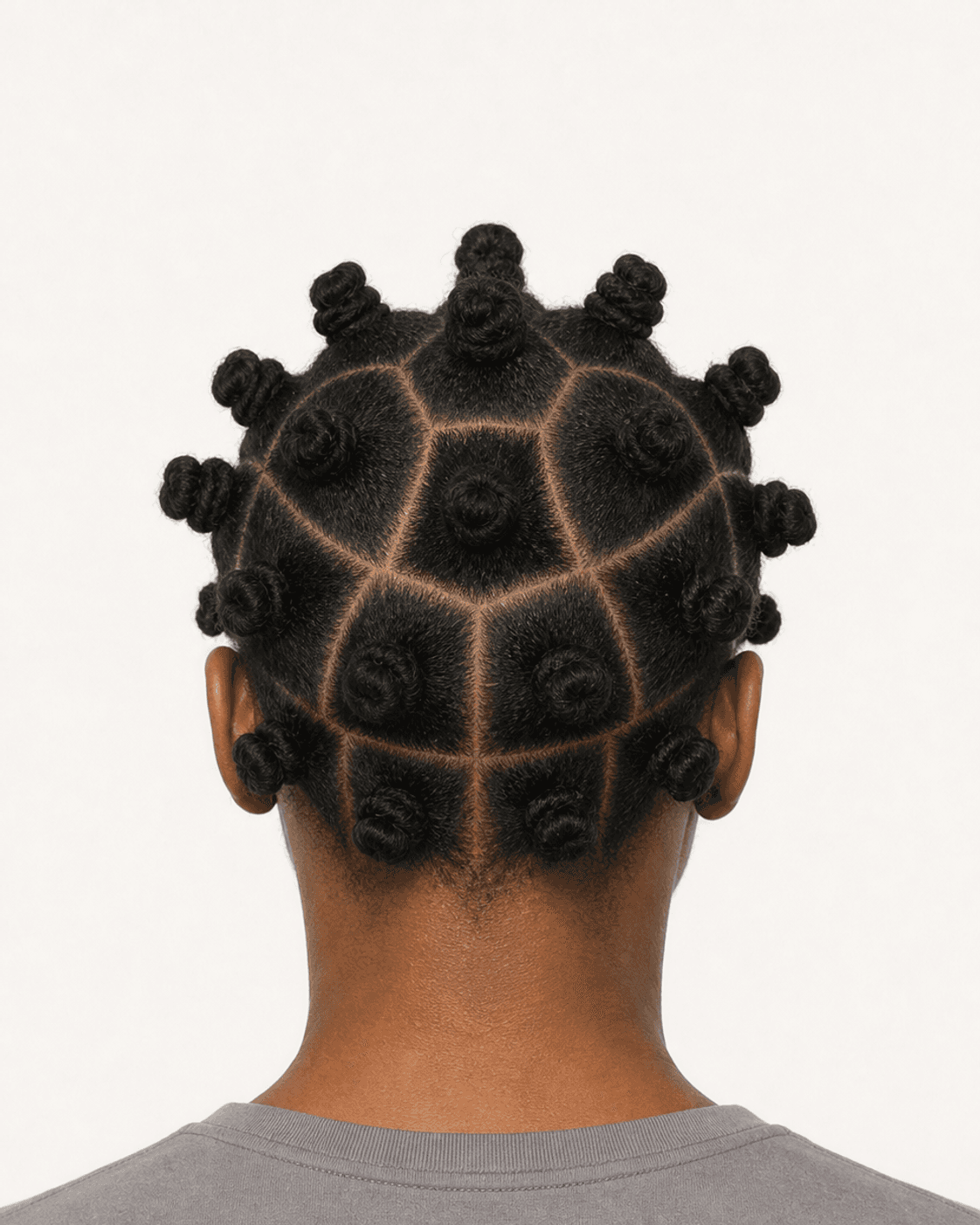
Annotated rear construction map for Bantu Knots. Rear view of Bantu knots showing balanced geometric sections
Rear180°
Approved publication view

Full distribution and natural nape edge

The rear view confirms balanced crown-to-nape coverage, visible section clarity, medium knot scale, and a softly natural low edge.

01

Crown-to-nape distribution

Medium compact knots continue across the crown, occipital area, rear sides, and lowest visible sections with broadly balanced coverage

02

Natural low nape edge

The lowest nape remains softly natural beneath the final sections without a blocked line, extension tail, or decorative finish

Pins locate the reference evidence; the numbered notes make the request legible in the chair. This is an original Hairqut communication diagram, not a universal service prescription.

Provenance: The diagram uses the locked approved publication views, which mirror the formal evidence package byte-for-byte. Its HTML and SVG overlays preserve those pixels and keep every label responsive and accessible. A newer generated raster passed all six exact labels and the cultural-provenance boundary but remains internal because its raster output cannot prove approved-pixel preservation and critical labels would not remain semantic.

Reference result

Medium compact Bantu knots distributed across clean skull-following geometric sections from the natural hairline through the nape, with visible scalp, natural edges, and no accessories.

Starting-state gate

A professional must assess dry and stretched length, shrinkage, density, strand condition, elasticity, tangling, porosity, scalp and edge health, current extensions or product buildup, and tolerance before choosing section size, root control, tension, or method.

Cultural and protective context

Bantu knots are an African and Black diasporic hair tradition. Respect the established name and wearer context; this record does not assign the illustrated style to one ethnic community, era, identity, or universal meaning, and protective benefit depends on technique, tension, condition, and care.

Full specification · evidence graded

What is known, what must be assessed.

Every field is marked by its evidence boundary. “Unknown” is intentional: the registry never invents hidden technique, anatomy, timing, or price.

Construction

Technical specification

Taxonomy and naming
The canonical record identifies Bantu knots with clean geometric parting. The established name is culturally meaningful and should not be replaced by a generic relabeling such as mini buns or twisted topknots.
Recorded
Knot scale
The visible knots are medium and compact with normal variation by region; the record does not establish one exact diameter or uniform volume.
Recorded
Visible section geometry
Clean square and softly triangular parts follow the skull curvature across the visible front, side, crown, rear, and nape fields.
Recorded
Knot construction
Each visible section resolves into a compact twisted or coiled wrap without ornament; the finished views do not establish twist direction, strand subdivision, root method, securement, or internal sequence.
Recorded
Full-head distribution
Medium knots remain broadly balanced from the hairline through the temples, sides, crown, occipital area, rear, and lowest nape sections.
Recorded
Scalp visibility
The approved views show clean visible part lines and realistic scalp texture; appearance alone cannot establish safe tension or scalp comfort.
Visible
Front hairline and edges
The natural front boundary remains visible without elaborate baby-hair artwork, pigment, a carved line, or decorative accessory.
Recorded
Nape edge
The lowest nape remains softly natural beneath the final sections without a blocked line, extension tail, or decorative finish.
Visible
Accessories
No beads, cuffs, thread, ribbon, rings, or other ornament are visible in this exact reference.
Recorded
Knot count and hidden grid
Exact knot count and complete section geometry are not stable across the AI-derived views; no fixed count, hidden grid, or one-to-one continuous-subject map is claimed.
Unknown
Technique, tension, and added hair
Twist direction, root control, tension level, anchor or elastic use, pinning, added-hair presence or amount, product formula, drying method, and installation sequence are not visible in the finished result.
Unknown
Variation boundary
Materially larger or smaller knots, flat twists, braided roots, elongated knots, fixed decorative parts, accessories, elaborate edge artwork, loose knot-out hair, or a partial-head layout is a variation rather than this exact reference.
Recorded

Adaptation

Hair and suitability

Reference texture
The approved images show a tightly coiled visual result, but exact curl pattern, strand diameter, untreated texture, and prior preparation are not recorded; appearance is not a universal suitability limit.
Visible
Texture, shrinkage, and stretch
Assess curl or coil pattern, shrinkage, stretched length, recoil, frizz, tangling, and response to handling before selecting section scale, knot size, or finish.
Assess
Density and section sizing
Assess density across the hairline, temples, sides, crown, rear, and nape; actual section size and count must distribute hair and tension rather than copy the illustration.
Assess
Length and achievable scale
Assess usable dry and stretched length in every region; shorter, tapered, uneven, fragile, or highly shrunken areas may require a different knot scale, placement, method, or growth period.
Assess
Porosity and moisture response
Not recorded; assess absorption, dryness, buildup, drying time, previous chemical or colour services, and response to cleansing, conditioning, hold, and moisture categories.
Assess
Condition, elasticity, and tangling
Assess breakage, shedding, weak ends, matting, knots, elasticity, and recent manipulation before twisting, wrapping, securing, wearing, or taking down the style.
Assess
Scalp and edge condition
Assess tenderness, irritation, lesions, flaking, thinning, traction history, temple fragility, nape bumps, and active symptoms before exposing parts or applying tension and product.
Assess
Tension tolerance
No safe tension value can be inferred from visible scalp or neat roots; comfort must be checked during installation and after movement, with prompt adjustment for pain or persistent pulling.
Assess
Head shape and placement
No universal face- or head-shape claim is supported; personalize section direction, knot scale, height, distribution, and front placement to the wearer and goal without changing the style's identity.
Assess
Finish and wear dependence
Knot size, root neatness, scalp visibility, hold, frizz, and comfort vary with texture, length, density, humidity, activity, moisture, drying, sleep, securement, product, and elapsed wear.
Recorded
Cultural provenance
Bantu knots are an African and Black diasporic hair tradition. The National Museum of African American History and Culture documents them as a long-standing staple among Black populations, while Pitt Rivers Museum situates them within African and African-American natural-hair histories. This record does not assign one ethnic origin or universal meaning.
Recorded

Service handoff

Booking service
womens_hairstyle
Appointment duration
Not specified in canonical evidence; confirm after length, shrinkage, density, condition, scalp, section scale, knot scale, root method, securement, added-hair plan, drying, and removal expectations are assessed.
Price
Not stored in this style record; the current booking service controls price and any added hair, removal, detangling, treatment, corrective, colour, chemical, accessory, or extended service requires separate confirmation.

Professional requirements

Skills

  • Designing a skull-following section map that balances visible geometry with actual density, head curvature, length, and the intended medium knot scale
  • Twisting, coiling, wrapping, and securing compact knots with comfort-led root control and adaptation for texture, shrinkage, elasticity, and condition
  • Protecting the natural hairline, temples, scalp, and nape while monitoring tension and avoiding decorative smoothing that was not requested
  • Planning cleansing, drying, night protection, wear monitoring, gentle removal, and detangling while communicating the style's African and Black diasporic context respectfully

Tools and product categories

  • Professional sectioning combs, clips, and control tools selected for scalp visibility, density, head curvature, and the agreed section map
  • Hands and twist or coil tools appropriate to the person's texture, length, elasticity, condition, and chosen root or securement method
  • Cleansing, conditioning, detangling, moisture, and hold categories selected for porosity, buildup, sensitivity, drying, and planned wear
  • Any elastic, pin, extension, accessory, or drying aid only after its need, material, tension, placement, and removal are explicitly agreed

Safety and starting state

Confirm before service

  • Current dry and stretched length, curl or coil pattern, shrinkage, density distribution, porosity, elasticity, condition, tangling, and prior preparation
  • Scalp sensitivity, tenderness, lesions, flaking, thinning, traction history, temple and nape fragility, active symptoms, and product buildup
  • Existing braids, twists, knots, extensions, securements, colour or chemical history, breakage, shedding, matting, and detangling needs
  • Requested section character, knot scale, full-head distribution, root neatness, tension tolerance, added-hair or accessory scope, wear goal, care access, and take-down plan

Do not promise unchanged

  • Do not copy a fixed knot count or complete section map from AI-derived viewpoints whose exact counts and shapes vary.
  • Do not promise a medium compact scale without enough usable length, density, elasticity, and condition in every required region.
  • Do not continue or advise waiting through pain, headache, burning, marked redness, bumps, numbness, or persistent tightness; adjust or remove and assess promptly.
  • Do not apply tension, securement, scratching, heat, or heavy product over active lesions, significant irritation, unexplained scalp symptoms, fragile edges, severe tangling, or compromised hair without appropriate assessment.
  • Do not assume twist direction, root method, securement, added-hair use, product formula, drying method, wear duration, protective benefit, or cultural meaning from the finished images alone.

Evidence and governance

Source package: os/hairqut-styles/registry/entries/HQ-STYLE-000045-bantu-knots-clean-parting

Asset relationship: All four approved publication images mirror the formal package byte-for-byte.

Generated media: The approved style views depict a fictional AI-generated subject; the underlying generation model and request ids are unavailable. Exact knot count and section shapes vary by viewpoint, so the set is not treated as one continuous physical subject or a complete fixed grid. The on-page diagram is a deterministic overlay on those locked views. A newer generated composite passed all six exact labels and the cultural-provenance boundary but remains internal because its raster output cannot prove approved-pixel preservation and critical labels would not remain semantic.

Privacy: No real customer photo, identity, or biometric record is used in this Blueprint.

Booking handoff: The Blueprint links to the existing womens_hairstyle service; duration, price, availability, added hair, removal, detangling, treatments, accessories, corrective scope, and colour or chemical work come from the current booking and consultation flow.

Freshness

  • Asset quality, viewpoint-variation warning, and provenance package assessed 2026-08-01.
  • Blueprint construction, internal image-generation evaluation, cultural context, and full specification reviewed 2026-09-12.
  • Cultural context cross-checked against National Museum of African American History and Culture and Pitt Rivers Museum sources listed in the internal evaluation README.

Consultation

Confirm section scale, knot placement, tension, and cultural context

  • Agree on medium compact knot scale and overall distribution, then adapt actual section number and shape to the person's density, head curvature, length, and desired visual balance.
  • Assess scalp, hairline, nape, strand condition, shrinkage, tangling, and prior tension before choosing root control, twist or coil method, and securement.
  • Use comfort as a live gate: secure does not mean painful, and exact tension cannot be copied from a finished image.
  • Confirm whether the style uses only the person's hair or separately approved added hair, plus desired wear, night care, cleansing, moisture, removal, accessories, and respectful use of the established Bantu-knot name.

Care plan

Keep the intent, not a fixed schedule.

  1. 1

    During installation and the first day

    Treat pain or persistent pulling as a stop signal

    Check every region, especially the hairline, temples, crown, behind the ears, and nape. Pain, headache, burning, marked redness, bumps, or persistent tightness requires prompt adjustment or removal rather than waiting for it to settle.

  2. 2

    At night and during rest

    Protect without crushing or snagging

    Use a comfortable satin or silk scarf, bonnet, or pillowcase category that fits the knot height and does not add pressure at the roots or rub vulnerable edges.

  3. 3

    While the style is worn

    Keep scalp and hair care lightweight and responsive

    Follow an assessed cleansing and moisture plan; avoid heavy buildup, scratching, repeated tightening, or adding product over irritation. Wear duration is not established by this record.

  4. 4

    At take-down

    Unwrap before separating or detangling

    Release any securement, gently unwind each compact knot, separate only after it is free, and detangle with appropriate slip and patience to limit breakage and avoid pulling the scalp.

Home kit

Product categories, not product pressure.

Protect

Comfortable satin or silk night-protection category

Choose a size and method that accommodates knot height without root pressure, edge friction, or snagging.

Cleanse

Scalp-cleansing category selected for the installed style

Choose method and frequency for scalp condition, activity, buildup, knot security, drying access, and professional guidance.

Moisture

Lightweight hair and scalp moisture category

Select for porosity, condition, sensitivity, climate, and buildup tolerance; more product does not compensate for excessive tension or irritation.

Take-down

Slip and detangling category

Use after securement is released and each knot is gently unwound; work in manageable sections without forcing tangles or fragile edges.

These are care and tool categories, not paid placements or a substitute for professional texture, density, length, shrinkage, porosity, elasticity, condition, scalp, edge, tension, cleansing, drying, and take-down assessment. No brand claim, fixed knot count, section map, tension prescription, product formula, securement, added-hair amount, wear duration, or guaranteed protective benefit is present.

Professional brief

Hand this evidence-bound Bantu-knot brief to your professional

Use the four approved registry views to align on visible knot scale, section character, full-head distribution, scalp clarity, hairline, nape edge, and accessory-free finish, then let the professional determine the section map, tension, twist direction, root method, securement, added-hair plan, product, and timing from the current hair and scalp.

  • The four approved registry views and the formal warning that exact visible knot count and section shapes vary across the AI-derived viewpoints
  • Medium compact coiled knots with clean square and softly triangular visible parts adapted to the actual head and density
  • Balanced coverage from the natural front hairline across the sides and crown to the lowest nape sections
  • Comfort-led tension, realistic visible scalp, natural edges, and no accessory unless requested as a separate variation
  • Respectful use of the established Bantu-knot name, explicit uncertainty about technique, and an agreed night-care, scalp-care, drying, and take-down plan
Book with this Blueprint

Blueprint v1.2 · reviewed . Every diagram pin and technical field was checked against the approved front, side, or rear publication view, the locked canonical record, the formal evidence package, and the cited cultural-context sources. Fixed knot count, hidden grid, twist direction, root method, tension, securement, added-hair use, natural texture, porosity, product formula, drying method, wear duration, price, protective benefit, wearer identity, specific ethnic origin, universal meaning, and continuity across AI-derived views were left unknown or assessment-required rather than inferred.

Canonical reference data

The source record behind the Blueprint.

These are the canonical attributes of the illustrated record. The Blueprint above translates them for a consultation; this section keeps the technical source explicit.

Knot size
Medium and compact
Parting
Geometric, skull-following
Coverage
Hairline through nape
Finish
Natural edges, no accessories

Style construction

Sections
Square and softly triangular parts follow the head shape rather than forming a flat diagram.
Knots
Each section is twisted and wrapped into a compact coiled knot without visible ornament.
Distribution
Medium knots remain balanced across the front, sides, crown, rear, and nape.
Scalp
Clean parting remains visible without excessive tension or artificial smoothing.
Edges
The natural hairline is preserved without elaborate baby-hair artwork.

Quality assessment

Visible, not implied.

92/ 100

Publication threshold: 85. Assessed .

Identity consistency91
Haircut geometry92
View compliance100
Hair realism92
Anatomy realism94
Photography consistency92
Provenance completeness95
Why this record passed with warnings
  • The exact visible knot count and section shapes vary by viewpoint, while the medium scale, geometric map, compact construction, and full-head distribution remain consistent.
  • OpenAI built-in image generation was used; the underlying model identifier is not exposed by this surface.
  • AI-derived viewpoints are internally consistent illustrations, not proof that one physical subject was photographed continuously from four angles.

Registry provenance

100% AI-generated from scratch.

The four images are an intentionally matched fictional reference set made specifically for this Hairqut record. Fictional person; no real person or celebrity was used as a reference. The set passed deterministic asset checks and a separate visual consistency assessment.

Generated media record: OpenAI built-in image generation via ChatGPT. underlying model identifier not exposed.

Book your appointment